Emergency Storm Damage Services in Mooresville
Emergency Storm Damage Tree Services in Mooresville
We serve Mooresville, NC and surrounding areas with emergency storm response
We provide emergency storm damage tree services throughout Mooresville, NC and the surrounding communities, including neighborhoods like Morrison Plantation, Bridgewater, The Point, and areas along Brawley School Road and Langtree Road. When a storm hits and a tree comes down on your property, time matters. We are available to respond quickly so we can assess the situation, make your property safe, and begin storm cleanup services as soon as possible. Our team has over 10 years of experience working in Mooresville, and we understand how urgent these situations can be for local homeowners.
The stress and danger of storm-damaged trees on your property
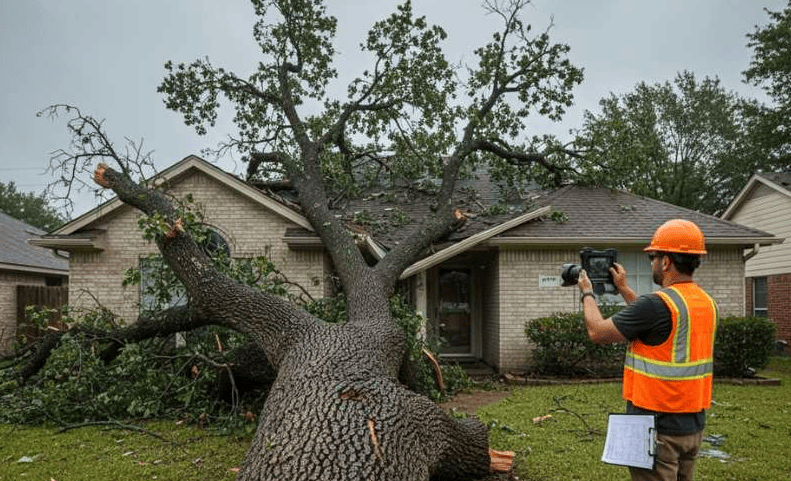
A fallen or damaged tree is not just an inconvenience. It is a real safety risk. A tree leaning against your roof, a large limb hanging over your driveway, or a trunk resting on a fence can all cause more damage if left alone. What looks stable after a storm often is not. Hidden cracks, split branches under tension, and root systems that have shifted can all give way without warning. We know that dealing with this kind of situation on top of everything else a storm brings is exhausting. That is why we focus on getting to you quickly, walking you through what we see, and handling fallen tree removal and debris removal safely and thoroughly so you are not left guessing about what comes next.
Our local knowledge of Mooresville weather patterns, tree types, and neighborhood conditions
Mooresville sits in the Piedmont Region of North Carolina, and the area around Lake Norman is known for strong wind events, especially along the Lake Norman shoreline where open water allows wind to build speed before hitting residential areas. Communities like Langtree at the Lake, Chesapeake Pointe, and River Run see this kind of wind exposure regularly. The Iredell County clay soils in many parts of Mooresville also affect how well trees stay rooted during heavy rain and saturated ground conditions. Large oaks, pines, and sweetgums are common in older subdivisions and along streets near Mazeppa Park and Lake Norman State Park, and these are the trees we most often see come down or split after severe weather. With over 20 years of combined experience, we have seen how local conditions affect tree stability, and that knowledge shapes how we approach every job.
Common questions Mooresville homeowners ask about emergency tree services
After a storm, most homeowners want to know the same things: Is my property safe right now? Can the tree be saved or does it need to come down? Will my insurance cover this? We hear these questions constantly, and they are all reasonable things to want answered fast. On the insurance side, we can help you document the damage with photos and written records to support your insurance claim assistance process with your homeowners insurance provider. We also get asked whether it is safe to try moving a limb or cutting a branch before we arrive. Our honest answer is that it usually is not. Storm-damaged trees behave unpredictably, and what looks like a simple situation can turn dangerous quickly. The sections below walk through what actually qualifies as a tree emergency and how we handle each type of situation.
What Counts as a Tree Emergency
Not every broken branch or leaning tree needs an emergency response, but some situations cannot wait. After a storm moves through the Mooresville area, it can be hard to know what is truly dangerous and what can be dealt with later. We have been working trees in Iredell County for over 10 years, and we have seen how quickly an unstable tree or hanging limb can turn into a serious problem. Knowing what to look for helps you make the right call.
Signs a Tree or Limb Needs Immediate Attention
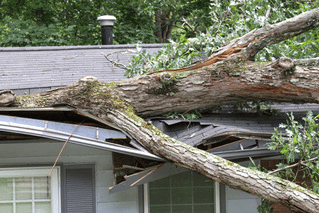
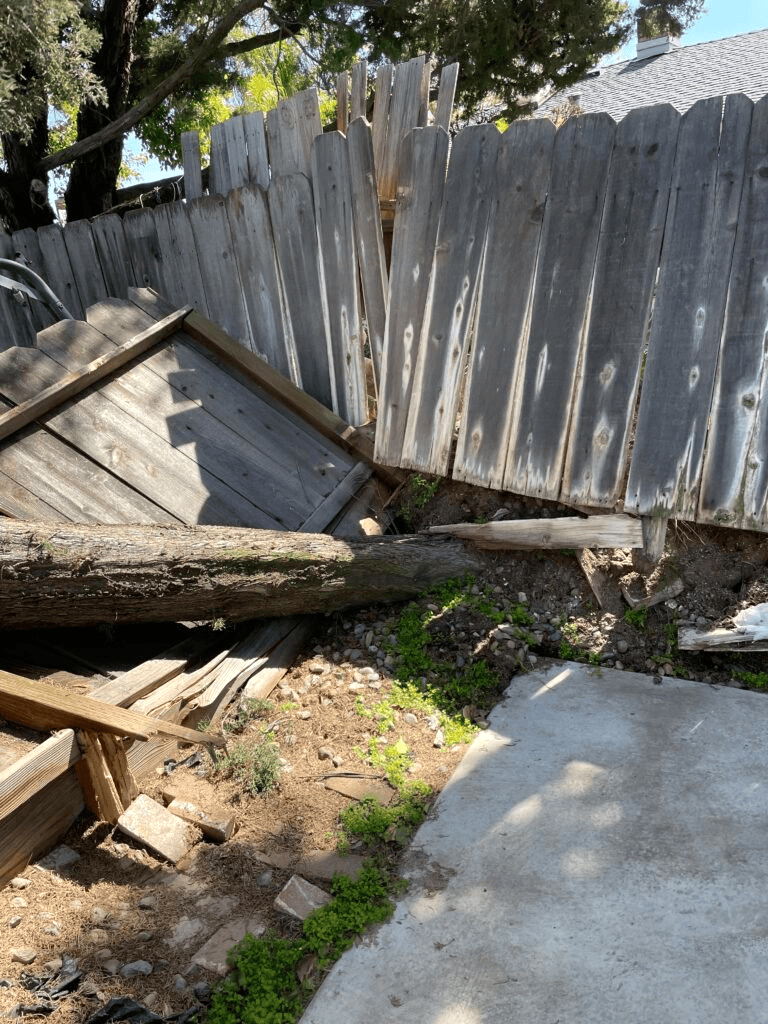
Some damage is obvious. A fallen tree removal situation, such as a tree resting on your roof, blocking your driveway, or lying across a fence, is a clear emergency. But other signs are less visible and just as serious. Watch for limbs that are cracked but still attached, leaning trees with exposed or lifted roots, and branches hanging over power lines near Brawley School Road, River Highway, or anywhere else on your property. If a tree is touching or near utility lines, do not go near it. Contact your utility provider and then call us. Trees along the Lake Norman shoreline and in neighborhoods like Morrison Plantation and Bridgewater often face extra wind stress due to Lake Norman fetch wind exposure, which can weaken root systems over time without obvious outward signs.
Difference Between Urgent Hazards and Non-Emergency Tree Damage
An urgent hazard is anything that puts people, vehicles, or structures at immediate risk. This includes trees leaning toward a home, limbs suspended in the canopy of another tree, and any trunk with visible splitting or bark separation near the base. Storm cleanup services for these situations should happen as soon as possible. Non-emergency damage, on the other hand, includes small broken branches that have already fallen clear of structures, minor splits on healthy trees that pose no immediate threat, and cosmetic issues like stripped bark. These can typically be assessed and scheduled during a standard visit. If you are unsure which category your situation falls into, it is always safer to call and let us take a look.
When to Call Us Right Away Versus Scheduling a Regular Visit
Call us right away if a tree or limb is on or touching your home, car, fence, or power line. Call us right away if a large limb is hanging overhead and could fall with the next gust of wind. Call us right away if you see a tree that has shifted, tilted, or cracked at the trunk after a storm. These are situations where waiting adds real risk. For everything else, including trees that look unhealthy, branches that are thinning, or cleanup of debris removal from smaller limbs already on the ground, we can schedule a visit at a time that works for you. If your property has been affected by a recent storm and you are also dealing with roof or structural concerns, we can help document the tree-related damage, which can support your insurance claim assistance process. Once we have addressed the immediate tree hazards on your property, we can also take stock of the full scope of what the storm left behind.
Types of Storm Damage We Handle
Storms around Lake Norman and throughout Mooresville can leave behind serious tree damage in a short amount of time. High winds, heavy rain, and fast-moving storm systems have a way of turning otherwise healthy trees into real hazards. Here is a breakdown of the situations we respond to most often and what makes each one worth treating carefully.
Fallen Trees Blocking Driveways, Walkways, and Access Points
A fallen tree across your driveway or walkway is more than an inconvenience. It can keep emergency vehicles from reaching your home and make it hard for you to get in or out safely. Our fallen tree removal work includes carefully cutting, rigging, and hauling away trees and large limbs so your access points are cleared without causing further damage to the surrounding property. We also handle storm cleanup services to make sure the debris is fully removed, not just pushed aside.
Hanging or Cracked Limbs Threatening Homes and Vehicles
Partially broken limbs are one of the more dangerous situations we deal with after a storm. They can look stable while holding a significant amount of weight under tension. One change in wind or temperature can bring them down without warning. We take hanging limbs seriously and use proper rigging to remove them in a controlled way, helping with wind damage repair planning and reducing the risk of injury to people, pets, and vehicles below.
Trees Leaning Against Structures, Roofs, or Fences
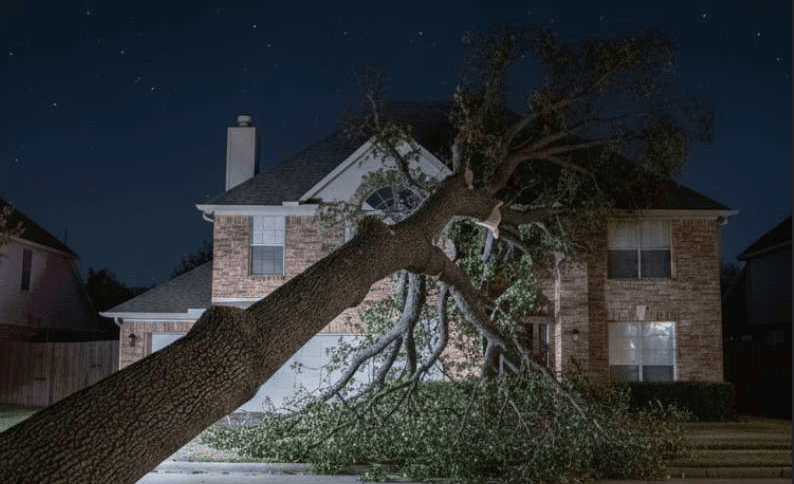
When a tree is pressing against your roof, fence, or siding, the damage is often already happening. The longer it stays in contact with the structure, the more it can wear through roofing material, bend gutters, or compromise the framing underneath. In some cases this opens the door to moisture issues, which is where mold prevention becomes a real concern down the line. We work to remove the tree cleanly and can help document the structural contact for your insurance records.
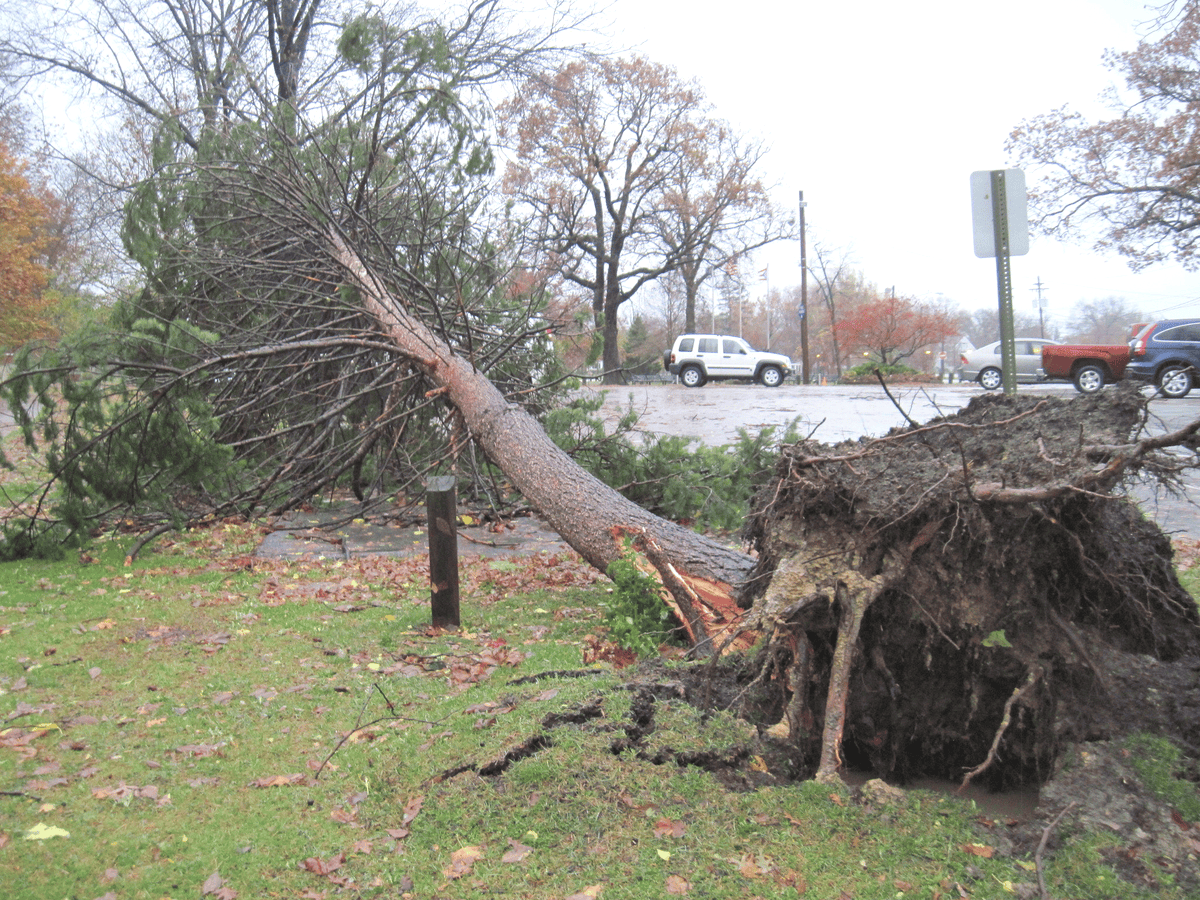
Uprooted Trees with Exposed Root Systems
Iredell County clay soils can hold a tree upright through a lot, but once the root system lets go, the whole tree can fall fast and unpredictably. Uprooted trees leave large holes in the ground, expose underground utilities in some cases, and can shift further even after they have come to rest. Our team assesses the stability of the root ball and surrounding ground before any cutting begins to make sure the work stays safe from start to finish.
Trees Near or Touching Downed Power Lines
This is the situation we urge you to stay away from entirely. Trees touching or tangled with downed power lines should be treated as energized until confirmed otherwise by Duke Energy or your local utility. We coordinate with the appropriate contacts and follow safe clearance procedures before any work begins near lines. We also understand local requirements through the Town of Mooresville Planning and Development and know when permits or utility notifications are needed before removal can proceed.
Whether you are dealing with one of these situations or a combination of several after a single storm, the steps we take to respond follow a consistent and careful process. Here is how we handle an emergency call from the moment you reach out to us.
A few years back, we got a call in the middle of the night from a homeowner over on Brawley School Road here in Mooresville. A bad storm had rolled through Lake Norman, and a massive white oak had split right down the middle and landed on the corner of their house. The tree was enormous, probably 80 feet tall and close to four feet wide at the base. To make things harder, part of the trunk had punched through the roof, and we had to be very careful not to cause more damage to the structure while we worked.
The biggest challenge we ran into was the weight distribution of the tree. When a tree that size falls and gets pinned against a roof, you can't just start cutting from the top down like you normally would. If you remove the wrong section first, the rest of the tree can shift and collapse further into the home. We had to spend a good amount of time just walking the site and planning every cut before we ever fired up a chainsaw.
We used a combination of rigging ropes and a crane to control each section as we removed it piece by piece. It took us most of that night and well into the next morning to safely clear the tree without causing any further damage to the home. By the time the sun came up, the roof was exposed and ready for the repair crew to come in.
That job is a good reminder of why experience matters so much in emergency storm damage work. With over 20 years of combined experience and more than 10 years working right here in Mooresville, we have seen situations like this before, and we know how to think through the problem before we act. When you call us after a storm, you can count on us to take the time to do the job right, even when the pressure is on.
Our Emergency Response Process
When a storm rolls through Mooresville and leaves trees down across your yard, driveway, or roof, knowing what comes next can take some of the stress off your shoulders. Here is a clear look at how we handle emergency storm calls from start to finish.
What Happens When You Call Us After a Storm
As soon as you reach us, we gather basic information about what you are dealing with. We want to know whether the tree or limbs are in contact with power lines, sitting on your roof, blocking access to your home, or posing any immediate risk to people nearby. This helps us understand what equipment to bring and how quickly we need to move. We serve neighborhoods across Mooresville, including areas around Lake Norman, Morrison Plantation, Byers Creek, and along Brawley School Road, so we are familiar with the types of trees and terrain common to this area.
How We Assess the Scene for Safety Before Starting Work
Before any chainsaw touches a single limb, we walk the site. Storm-damaged trees can look stable and still be extremely dangerous. Hidden cracks, root failure, and what professionals call "widow makers" — hung-up limbs under tension — can shift or drop without any warning. We check the lean of the tree, the condition of surrounding trees that may also be compromised, and whether there is any contact with utility lines. If power lines are involved, we coordinate with the utility provider before we proceed. We take fallen tree removal seriously because rushing this step is how people get hurt.
The Order in Which We Prioritize Hazards and Clearing
Not all storm damage is equal, so we work through the site in a logical order. We address active safety threats first, including trees or limbs on structures, anything near power lines, and anything blocking emergency access. After that, we move to trees that are leaning or partially uprooted and still at risk of falling. Once the immediate hazards are controlled, we move into storm cleanup services and debris removal. If your home has taken structural damage, we can help document the scene for insurance claim assistance and coordinate with other trades for steps like tarping services or property damage repair.
Equipment We Use to Handle Large and Complex Storm Damage
Larger jobs require more than a chainsaw and a pickup truck. Depending on the situation, we use equipment including a Versalift Bucket Truck and an Altec Aerial Lift to safely reach trees that have fallen onto roofs or lodged high in other trees. Rigging gear allows us to control how sections of a tree come down so we avoid adding damage to structures already under stress. For properties in areas like The Point or Langtree at the Lake, where mature trees are common and lots are tightly spaced, this kind of precision matters. Our team has over 20 years of combined experience and has been working in Mooresville for more than 10 years, so we know how to handle the conditions specific to Iredell County clay soils and the wind exposure that comes with Lake Norman fetch.
Once the hazards are cleared and the debris is staged for removal, the focus shifts to making sure your property is protected from any additional damage while full cleanup and repairs get underway.

Protecting Your Property During and After Cleanup
How we work to avoid additional damage while removing trees
When a storm hits neighborhoods like Morrison Plantation or Byers Creek, fallen or leaning trees can threaten your roof, fence, vehicle, and anything nearby. We take a careful, step-by-step approach to fallen tree removal so we do not cause more damage in the process. Before we cut anything, we look at where the tree is sitting, what it is resting on, and how the weight is distributed. A rushed cut can send a heavy limb through a roof or onto a power line. We use rigging and controlled lowering techniques to bring pieces down safely, piece by piece when needed. If the tree is near your home, we may use an Altec Aerial Lift or a Versalift Bucket Truck to reach high limbs without putting pressure on your structure.
Securing unstable trees and limbs until full removal is complete
Not every damaged tree can be fully removed in one visit, especially after a widespread storm across Mooresville or the Lake Norman area. In those cases, we make the area as safe as possible right away. Hanging limbs and split trunks are the most dangerous parts of any storm-damaged tree because they can fall without warning. We identify and address those first. If tarping services are needed to protect an exposed roof while a tree is still partially in place, we handle that too. We also coordinate with Iredell County Emergency Management when utility lines are involved, since working near downed wires requires a separate clearance before we can proceed safely.
Clearing debris to restore safety and usability of your yard
Once the primary hazards are handled, we move into storm cleanup services and full debris removal. Branches, bark, root material, and soil disruption can leave your yard difficult to walk through and unsafe for kids, pets, and vehicles. We clear driveways, walkways, and access points first so you can get in and out of your home. Debris is hauled away or chipped on site depending on what works best for your property. We work with local guidelines from the Mooresville Public Works Department regarding disposal and do not leave material piled at the curb in ways that block traffic or create new hazards on roads like Brawley School Road or Williamson Road.
Steps we take to reduce risk of further collapse from weakened trees
After the obvious damage is cleared, there are often trees still standing that were stressed or weakened by the storm. These are the ones that homeowners tend to overlook. Iredell County clay soils can shift during heavy rain, which loosens root systems even in trees that look stable from the outside. We inspect nearby trees for leaning, soil heaving, cracked bark, and canopy loss. When a tree can be saved, we prune it correctly to reduce the load and give it a better chance of recovery. When it cannot, we recommend removal before a secondary collapse causes property damage repair costs to add up further. These steps are also worth documenting for your insurance records, and we can help you organize that information for an insurance claim assistance process. As we work through the visible storm damage, we also keep an eye out for signs of harm that are not immediately obvious, which brings us to what often goes unnoticed after a severe weather event.
Hidden Storm Damage You Might Not Notice
After a storm moves through Mooresville, the damage you can see from your yard is only part of the picture. Fallen branches on the lawn or a split trunk near the road are obvious. But some of the most serious problems are the ones you cannot see from the ground, and those are often the ones that cause injury or property damage days or even weeks after the storm has passed.
Why Some Tree Damage Is Not Visible from the Ground
High winds, heavy ice, and the kind of fast-moving storms that come through the Lake Norman area can stress a tree in ways that do not leave obvious marks. A crack near the top of a 60-foot oak may be invisible unless someone is up in the canopy. Bark that looks intact on the outside may be hiding a split that goes deep into the wood. In some cases, a tree that looks perfectly fine is barely holding together. We have seen this pattern repeatedly in neighborhoods around Byers Creek and Morrison Plantation after severe weather events, and it is one of the main reasons we do not rely on a quick look from the ground when assessing storm-damaged trees.
Structural Weaknesses That Develop After High Winds or Heavy Ice
Wind loading puts enormous strain on a tree's root system and its main branch unions. The ASCE 7 Wind Load Standard helps engineers understand how wind forces act on structures, and trees face similar physics. When roots shift even slightly during a storm, the ground around the base of the tree may settle back into place and look normal, but the root anchoring can be seriously compromised. Ice storms create a different kind of damage. The weight of ice causes limbs to crack at weak points, and those cracks often do not fully separate. Instead, they hold together loosely, what arborists sometimes call a included bark failure point, and can give way under the next load of rain or wind. In Iredell County, where clay soils hold moisture and can shift after heavy rainfall, root zone damage is a real concern that is easy to overlook.
How We Inspect Trees for Damage That Could Cause Future Problems
When we assess a storm-damaged tree, we look at more than what is obvious. We check the base of the tree for soil heaving or gaps around the root flare, which can signal root failure. We look at major branch unions for bark inclusions or cracks that run along the grain of the wood. We also use our experience and sometimes equipment like the Flir E8 Thermal Camera to identify areas where internal decay may have spread. A Versalift Bucket Truck allows us to get up into the canopy and inspect areas that cannot be evaluated safely from the ground. This kind of hands-on assessment is what separates a thorough inspection from a quick glance. Our team has been working trees in the Mooresville area for over 10 years, and that local experience matters when it comes to understanding how specific conditions here affect tree health after a storm.
Common Tree Species in Mooresville That Are More Prone to Storm Damage
Not all trees handle storms the same way. In the Piedmont Region, certain species show up again and again in our post-storm work. Loblolly pine is common throughout Mooresville and is prone to snapping near the top in high winds because of its height and relatively narrow trunk. Willow oak, which you see frequently in older neighborhoods near Mooresville Historic Downtown, has a broad canopy that catches a lot of wind and can develop included bark unions that fail under stress. Bradford pear, still common in many yards despite its known problems, splits apart almost predictably in wind or ice events. Water oak, often found near low-lying areas around Back Creek and Coddle Creek, tends to develop internal decay that is invisible from the outside until a storm accelerates the failure. Knowing which species you have on your property is one of the first steps in understanding your actual risk level.
Storm damage to trees is not always dramatic, and that is exactly what makes it dangerous. A tree that looks stable after a storm may have hidden cracks, compromised roots, or hanging limbs that are waiting for the next weather event to come down. Those kinds of failures do not just damage property. They can also land near power lines, which brings a different and more immediate level of risk that deserves its own attention.
Locally Rooted Tree Care in Mooresville
We are a locally based tree care company serving Mooresville, NC and the surrounding area. Our crew has over 20 years of combined experience in tree care, and we have been working specifically in Mooresville for more than 10 years. That means we know this area well — the tree species that grow here, the soil conditions across different neighborhoods, the storms that roll through Lake Norman, and the common tree problems that affect properties in this part of North Carolina.
Tree work is not something to take lightly. Whether a tree is leaning toward your roof, a storm has dropped a limb across your driveway, or you simply want your trees to stay healthy for years to come, the decisions made during tree care have real consequences for your property and your safety. We take that seriously on every job we do.
Our team handles a full range of tree services for both homes and businesses in Mooresville. We do routine work like tree trimming, pruning, and fertilization, and we also respond to emergency situations when a tree or limb becomes a hazard after a storm. On top of that, we offer stump grinding, root removal, land clearing, tree planting, invasive species management, and tree health assessments when something does not look right with one of your trees.
When you work with us, you get a crew that carries the proper equipment, follows safe work practices, and cleans up thoroughly when the job is done. We are not a company that does a quick cut and leaves the mess behind. We treat your property the way we would want our own treated, and we bring real local knowledge to every project we take on in Mooresville.
Electrical Hazards and Downed Lines
When a storm moves through the Lake Norman area, trees don't always fall in open yards. They come down on fences, roofs, vehicles, and power lines. That last one is the most serious situation you can face after a storm. A tree on or near a power line is a life-threatening hazard, and it needs to be treated that way from the moment you spot it.
What to Do If a Tree Has Fallen Near or on a Power Line
The first thing to understand is that a downed or damaged power line can remain energized even when it looks dead. Never touch the tree, the line, or anything in contact with either one. Keep children and pets away from the area, and do not attempt to move branches or debris near the line yourself.
Call 911 first if there is any immediate danger to people or property. Then contact Duke Energy, which serves most of Mooresville and the surrounding Iredell County area, to report the downed line. You can also reach out to Mooresville Fire and Rescue if the situation is actively dangerous. Do not wait to report it assuming someone else already has.
Stay well back from the tree. Electricity can travel through wet grass, soil, and standing water, which is a real concern after heavy rain along areas like the Lake Norman shoreline or in low-lying spots near Byers Creek and Coddle Creek. Keep a minimum of 30 to 40 feet between yourself and anything that may be energized.
How We Coordinate with Local Utilities Before Working Near Lines
We do not begin fallen tree removal near power lines until we have confirmed with the utility provider that the lines are either de-energized or that a utility crew is on-site to manage them. That is not a suggestion we follow when it is convenient. It is something we treat as a firm rule on every job.
Before we send a crew into position near a line, we communicate directly with Duke Energy or the relevant provider to understand the status of the line. In some cases, that means waiting. In others, the utility can have a crew on location within a reasonable window. We use equipment like the Versalift Bucket Truck and Altec Aerial Lift for overhead work, but that equipment never goes near an energized line without utility coordination in place.
Our team also stays current on local code and utility clearance requirements as they apply to tree work in Mooresville. The Town of Mooresville Planning and Development office and Iredell County Building Inspections may be involved depending on the scope of the job, and we factor that into how we plan the work.
Safety Steps to Take Before We Arrive at Your Property
While you are waiting for us, there are a few practical steps you can take to protect yourself and your household without putting anyone at risk.
Keep everyone inside or away from the side of the property where the tree or lines are located. If a line has come down anywhere near your home, avoid using water from outdoor faucets, touching metal fencing, or standing in puddles near the affected area. Ground current is a real hazard that many people do not think about.
If a tree has landed on your home and you can safely move to another part of the house, do that. Do not go onto the roof or attempt to assess damage from above. Take photos through windows or from a safe distance. Those photos will be useful later during the storm cleanup services process and when working with your insurance provider.
Turn off the main electrical breaker to your home if a tree or limb has made contact with your roof or exterior walls and you can safely reach your breaker panel. This is a precaution that can reduce the risk of a fault running into your home's electrical system.
Mark the area near the hazard with something visible if you have it, like a lawn chair, trash can, or bright object, so that neighbors, delivery drivers, or anyone unfamiliar with the situation does not wander into the danger zone before we arrive.
Once the immediate electrical hazard is addressed and we have cleared the area as safe, we move into assessment and removal. Part of that process involves documenting what we find, and that documentation matters beyond just the tree work itself. Accurate records of storm damage, including photos, written assessments, and a clear account of what was removed and why, play a significant role in what comes next when you file a claim with your homeowners insurance.
Insurance Documentation and Storm Damage Records
How We Help You Document Damage for Your Insurance Claim
After a storm rolls through Mooresville, one of the first things you may be thinking about is your homeowners insurance. Filing a claim can feel overwhelming when you are already dealing with a fallen tree on your roof or a blocked driveway. We help take some of that weight off your shoulders by documenting the damage thoroughly from the start. As part of our storm cleanup services, we record what we find on your property, including photos, written notes, and measurements that your insurance adjuster will likely ask for. Using tools like the Flir E8 Thermal Camera and the Tramex Moisture Encounter Plus, we can identify hidden damage that is easy to miss during a quick visual check. This kind of detailed documentation supports your claim and gives you a clearer picture of what happened to your property.
What Photos and Records Your Insurance Company May Need
Most insurance companies want to see clear evidence of the damage before they approve a claim. That typically includes date-stamped photos of fallen trees, broken limbs, damaged structures, and any areas where debris made contact with your home or vehicle. They may also ask for records showing the condition of the tree before the storm, which is not always easy to provide. As part of our debris removal and assessment process, we hold off on clearing everything until we have a full record in place. We document each section of damage systematically so nothing is overlooked. If your roof, fence, or siding was affected by a tree or large limb, we note that too, since wind damage repair and related structural concerns often factor into the total claim. We can also provide written estimates through Xactimate Estimating Software, which is widely recognized by insurance carriers.
Why Acting Quickly Can Support a Stronger Insurance Claim
Timing matters more than most people realize when it comes to storm damage and insurance. The longer you wait, the harder it becomes to prove what caused the damage versus what may have already existed. In areas around Lake Norman, where wind exposure from open water can be significant, storms can cause damage that looks minor on the surface but goes deeper into a structure. Quick action through professional fallen tree removal and assessment helps establish a clear record tied to the storm event. It also reduces the risk of secondary damage, like moisture getting into your home after a tree punctures a roof. Insurance companies generally respond better to claims that are documented promptly and professionally. We are familiar with working alongside homeowners in neighborhoods across Mooresville, from Morrison Plantation to Langtree at the Lake, and we understand how to support the claims process without slowing down the cleanup.
Of course, what you are dealing with after a storm depends a lot on what kind of storm hit. The types of severe weather that move through Mooresville each year are not all the same, and neither is the damage they leave behind.
Storms Common to Mooresville, NC and What They Leave Behind
Living in the Piedmont Region of North Carolina means dealing with a steady rotation of severe weather throughout the year. From the Lake Norman shoreline to neighborhoods along Brawley School Road and Langtree Road, storms here can cause serious tree damage in a short amount of time. When that happens, fast storm damage cleanup and fallen tree removal become a real priority for keeping your property and family safe.
Seasonal Storm Patterns in the Lake Norman and Mooresville Area
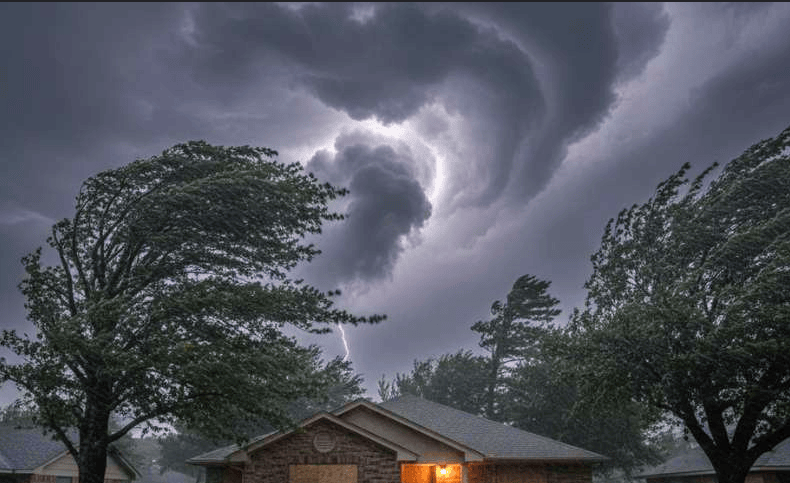
Mooresville sits in Iredell County, where the weather shifts quite a bit across the seasons. Spring and summer bring strong thunderstorms capable of producing high winds, heavy rain, and lightning strikes that can split or topple large hardwoods. The Lake Norman fetch wind exposure adds to this, allowing wind to build momentum across open water before hitting homes and trees along the shoreline. Fall and winter bring a different kind of problem. Ice storms and nor'easters can coat branches with a thick layer of ice, adding enormous weight that causes limbs to fail and whole trees to come down. Debris removal after these events often involves clearing roads, driveways, and yards before families can even get back to their normal routines.
How Summer Thunderstorms and Winter Ice Storms Affect Trees Differently
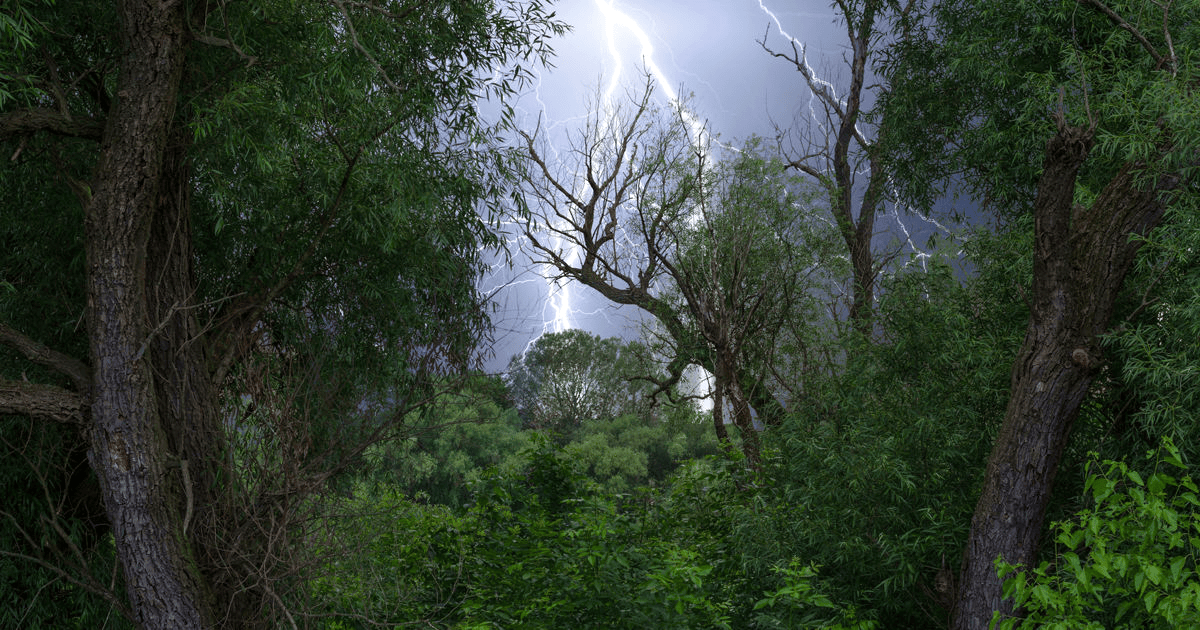
Summer storms hit fast and hard. Wind and lightning are the main culprits, and they tend to cause sudden, visible breaks. You might find a large oak split down the middle or a pine leaning against your roof after a single storm cell passes through. These situations often need wind damage repair and immediate property assessment to catch hidden structural concerns before they get worse.
Winter ice storms work more slowly but can be just as damaging. Ice accumulation stresses the entire canopy, and branches that look intact may have developed internal cracks you cannot see from the ground. Trees in the Iredell County clay soils are also more prone to root failure after prolonged soil saturation, which makes leaning trees even more unstable after a heavy ice event. In these cases, we use equipment like the Flir E8 Thermal Camera and the Tramex Moisture Encounter Plus to help evaluate hidden damage on structures that trees may have already contacted. Addressing these risks early can reduce the chance of needing more costly property damage repair down the road.
Neighborhoods and Areas in Mooresville We Frequently Serve After Storms
We have worked in Mooresville for over 10 years and know which areas tend to see the heaviest tree damage after a storm. Communities near Lake Norman, including The Point, Chesapeake Pointe, and Lake Shore, deal with wind-related damage regularly due to their open exposure. Neighborhoods like Morrison Plantation, Bridgewater, and River Run have mature tree canopies that add to storm cleanup demands. We also respond frequently to calls from Langtree at the Lake, Byers Creek, and areas along Coddle Creek Road and West Mooresville Road.
After major weather events, Iredell County Emergency Management and Mooresville Fire and Rescue handle immediate life safety needs, but ongoing storm cleanup services and debris removal fall to property owners. That is where we come in. Whether you are dealing with a tree on your roof or a large limb blocking your driveway, understanding the type of storm that caused the damage helps us respond with the right tools and approach. With that context in mind, here is what you should know about your options when storm damage affects your property.
Getting Your Property Back to Normal as Quickly and Safely as Possible
Storms in Mooresville can move fast and leave a lot behind. Whether it was a summer thunderstorm rolling off Lake Norman, a line of severe winds pushing through Iredell County, or a late-season ice storm that snapped limbs across Morrison Plantation or River Run, the damage is real and it does not wait for a convenient time. What you do in the hours right after a storm can make a big difference in how much additional damage your property takes.
Leaving a fallen or unstable tree in place puts your home, your vehicles, and your family at risk. Hanging limbs and split trunks can come down without warning. If a damaged tree is leaning toward your roof or sitting across a fence line near a neighbor's yard, the window to act safely is short. Storm cleanup services and fallen tree removal are not tasks to put off until next weekend.
We have been working in Mooresville and the surrounding Lake Norman area for over 10 years, and our team brings more than 20 years of combined hands-on experience to every job. We know the tree species common to this area, the soil conditions in Iredell County clay, and the way storm damage tends to show up differently in lakeside communities like Langtree at the Lake or Chesapeake Pointe versus inland neighborhoods along Brawley School Road or Highway 21.
Why Working with a Local Mooresville Tree Contractor Matters After a Storm
After a major storm, it is common to see out-of-town crews moving through neighborhoods offering quick fixes at low prices. These operations often lack local knowledge, proper insurance, or the right equipment for the job. Choosing a contractor who is already rooted in this community means faster response, real accountability, and someone who understands what Mooresville properties face.
Here is what working with us gives you after storm damage:
- Fast removal of fallen trees and dangerous limbs before more damage occurs
- Professional risk assessment of trees that look stable but may not be
- Safe clearing of driveways, walkways, and access points along roads like Langtree Road or Williamson Road
- Debris removal and full yard cleanup so your property is usable again
- Reduced risk of injury to your family, pets, and neighboring properties
- Protection for your roof, fencing, vehicles, and outbuildings
- Awareness of power line proximity and coordination with local utilities when needed
- Support with insurance claim assistance including photos, documentation, and written estimates
- Proper equipment for the job, including aerial lifts for tall or difficult trees
- Knowledge of permit requirements through the Town of Mooresville Planning and Development office when tree removal triggers local review
- Honest assessment of whether a damaged tree can be preserved or needs full removal
- A cleaner, safer yard when the work is done
- Less stress during an already difficult time
- Full liability insurance and workers compensation coverage that protects you financially
When a tree has already come down on a structure, the risks multiply quickly. Water can enter through a damaged roof. A leaning trunk can shift and cause further collapse. What starts as a tree problem can turn into a much larger property damage repair situation if not handled correctly and quickly.
How to Reach Us When You Need Help Right Away
We are local, we are experienced, and we are ready to help you get through this. If a storm has left your Mooresville property with fallen trees, dangerous limbs, or blocked access, do not wait. The sooner we can assess the situation, the sooner we can make your property safe and begin getting things back to normal.
Contact us today for a free quote. You can call us directly or fill out the form below. We will get back to you quickly and walk you through exactly what needs to happen next.
Mooresville NC Tree Contractor
128-162 North Broad Street
Mooresville, NC 28115
Business Hours
| Mon | 7:00 AM – 10:00 PM |
| Tue | 7:00 AM – 10:00 PM |
| Wed | 7:00 AM – 10:00 PM |
| Thu | 7:00 AM – 10:00 PM |
| Fri | 7:00 AM – 10:00 PM |
| Sat | 7:00 AM – 10:00 PM |
| Sun | 7:00 AM – 10:00 PM |